
The ceiling nobody talks about
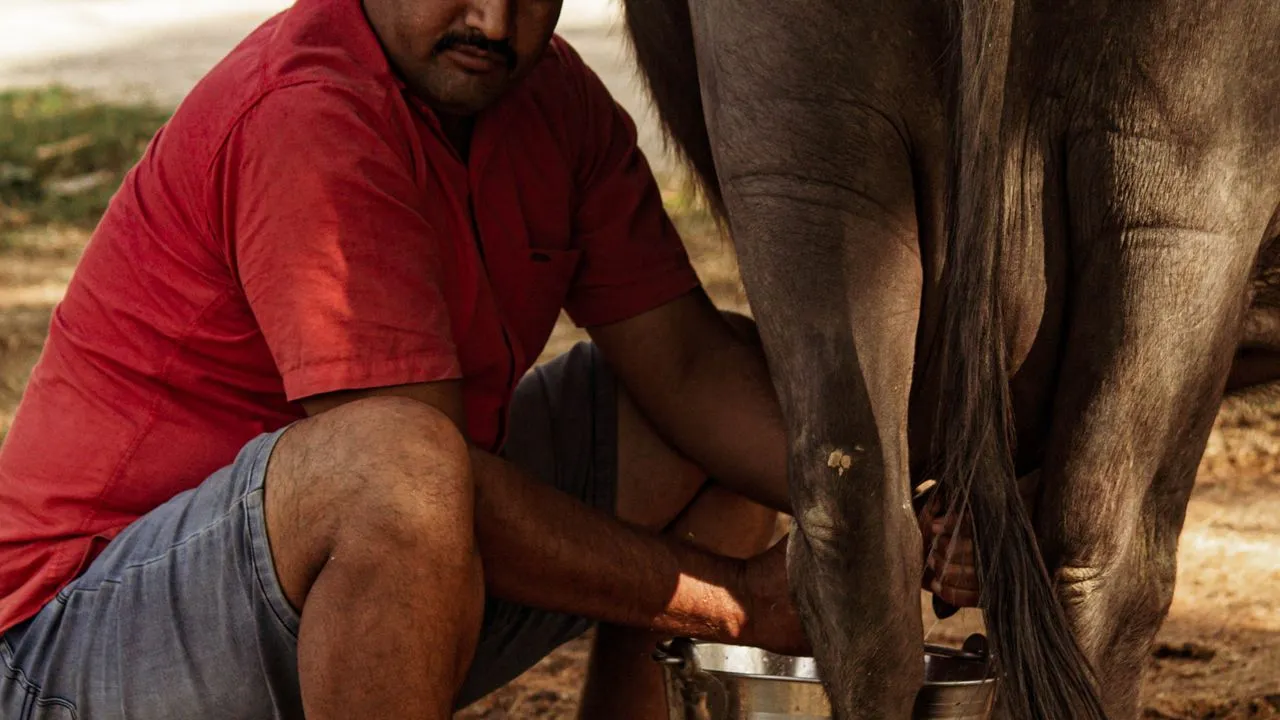
Govind Patidar — Govind Bhaiya to everyone in Sanwer, a town just outside Indore — runs a milk-collection point off the Ujjain road. Two years ago he was stuck. Not for lack of customers — stuck at 100 litres a day, turning milk away, because he simply could not keep track of any more.
This is the part most people get wrong about a dairy business. Govind didn't have a demand problem. He had a hisaab problem. From the outside, the two look exactly the same.
Every evening he kept three notebooks. One for suppliers — who brought how much milk, at what fat. One for customers — who took how much. One for payments — who paid, who still owed. "By 100 customers, the copy was the business," he says. "I wasn't running the dairy. I was running the copy."
The night that changed his mind
The breaking point was an ordinary night. A regular, Patidar ji, swore he'd been overcharged the month before. Govind sat under the bulb till eleven flipping pages — and found his own mistake: an entry he'd forgotten to carry forward. He returned the money. But the lesson stuck: every new customer was a fresh chance to lose money he couldn't even see.
So he stopped taking new ones. At the exact moment more families in Sanwer were asking him for milk, he was saying no — because his notebook said no.
What actually changed
A friend who ran a bigger centre near Dewas showed him DudhHisaab App. Govind resisted — "mere bas ka nahi hai ye sab," this isn't for me. He didn't read English. He was sure he'd press the wrong button and ruin everything.
Three things turned out to be true that he hadn't expected:
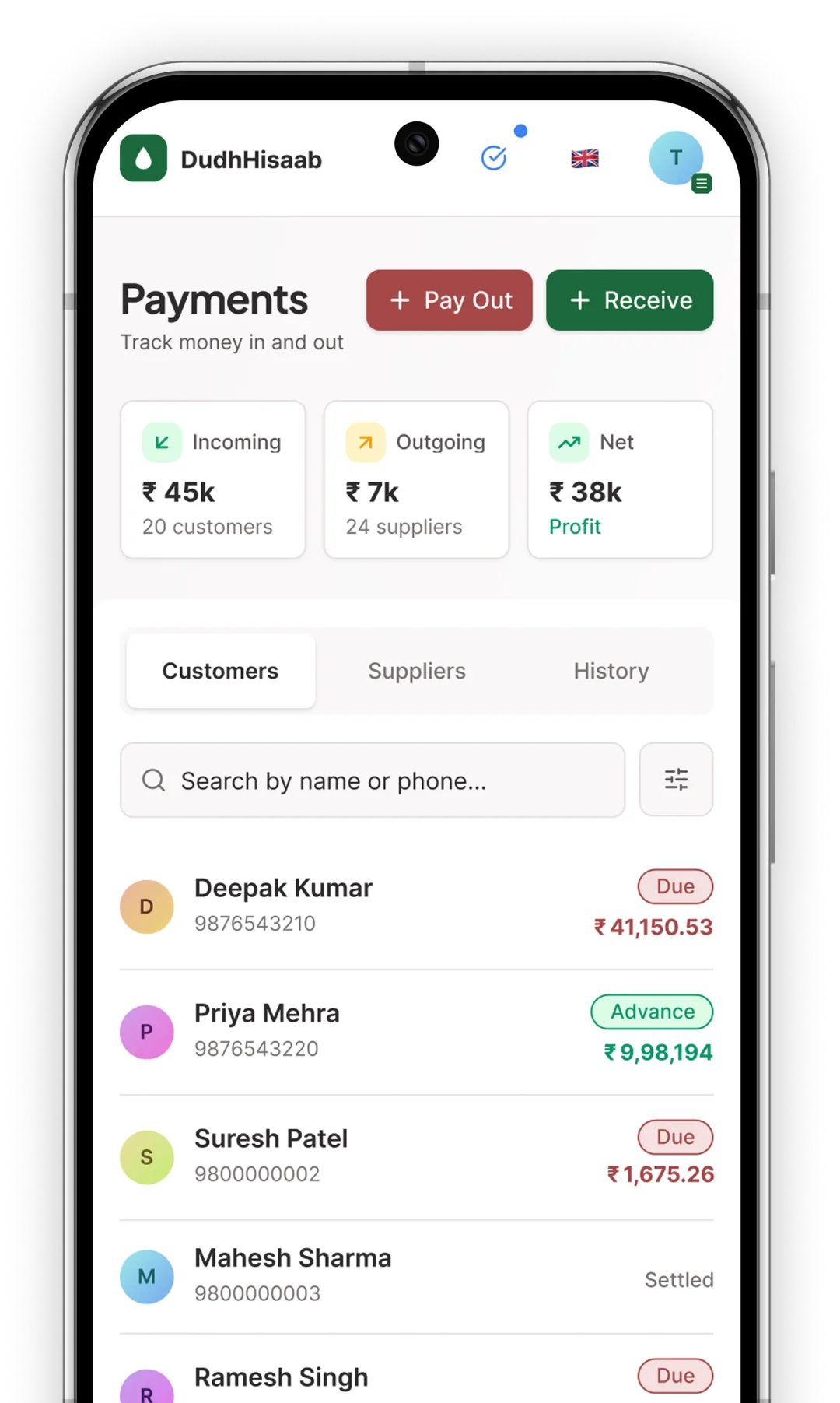
- It worked in Hindi. The numbers too — he could read every figure without translating it in his head.
- The mistakes stopped. Supplier milk, customer milk, payments, dues — one place, not three notebooks.
- He got his evenings back. The month-end total that used to eat half a day became one tap.
When Patidar ji argued again, Govind didn't reach for a register. He forwarded him his own statement on WhatsApp — every litre, every payment, every date. The argument ended in thirty seconds.
None of this sold a single extra litre of milk. Read that again, because it's the honest part. The app didn't bring Govind customers.
How the growth actually happened
What the app did was remove the ceiling.
The demand had been there all along — families asking, suppliers with more to give. What Govind lacked was the capacity to say yes without the whole thing collapsing into a pile of disputed entries.
Once tracking 200 customers was no harder than tracking 100 — once a new customer was just one more row, not one more chance to lose money — he started accepting the milk he'd been turning away.
100 litres became 180. Then 250. Within the year, 350 litres a day. "Doodh utna hi tha," Govind says. "Main usse sambhaal nahi paa raha tha." The milk was always there. He just couldn't handle it.
"It runs in my language"
The thing that finally won him over wasn't a feature — it was that the app spoke the way he did. DudhHisaab runs in Hindi, Hinglish, Gujarati and Marathi, and it can even show the numbers in Devanagari. For an owner who had spent twenty years sure that "apps aren't for people like me," that was the whole battle.
What he'd tell another dairy owner
"If you're stuck, ask yourself honestly — is there really no milk? Ya tum sambhaal nahi paa rahe? For me it was the second one. The day the hisaab stopped being my job, the business could finally grow."
Govind still wakes at 4 AM. He still knows half his customers by name. But he doesn't run the copy anymore. The copy runs itself — and he runs the dairy.
Download DudhHisaab for free and stop letting a notebook decide how big your dairy can get.Govind's growth, in one table
Every number below is from his own story — the milk was always there; what changed was his ability to handle it.
| Stage | Daily volume | What he could handle | What was holding him back |
|---|---|---|---|
| Stuck (start) | 100 litres | 100 customers on three notebooks | The copy was the business — no room for one more row |
| First step up | 180 litres | Supplier milk, customer milk, payments in one place | Mistakes had stopped, so he stopped saying no |
| Building | 250 litres | A new customer = one more row, not one more risk | — |
| Today | 350 litres a day | The same demand he used to turn away | Nothing — "the copy runs itself" |
The app sold him zero extra litres. It just removed the ceiling so the demand that was already there could come in.
What "running in his language" looks like
The single thing that won Govind over wasn't a feature — it was that DudhHisaab speaks the way he does. It runs in Hindi, Hinglish, Gujarati and Marathi, and it can show the numbers in Devanagari too, so an owner who spent twenty years sure that "apps aren't for people like me" could read every figure without translating it in his head. The same Grow tab that surfaces his day's profit and milk-in-vs-milk-out is where his own numbers start pointing to his next move.
Related guides
- The Grow Tab: How DudhHisaab Turns Your Own Numbers Into Your Next Move
- How to Scale Your Milk Business from 20 to 200 Customers
- Send Every Customer Their Day's Delivery on WhatsApp — in One Tap
- Digital vs Paper Khata: Why Milkmen Are Switching to Apps
- See every feature Govind uses on the DudhHisaab features page.